The CEFR Levels

What are the CEFR and A1 to C2 levels?
When they want to know your level in a language, people ask for your CEFR level. What is this?
Foreign language study creates more positive attitudes and less prejudice toward people who are different.
The Common European Framework of Reference for Languages (CEFR), was published by the Council of Europe in 2001 as a reference document describing the knowledge and skills language learners have to develop to be able to communicate effectively in a foreign language. It provides a common basis for the development of language curricula and textbooks, and for the interpretation of the scores of language tests.
🤓 All you need to know in a nutshell! 👇

First CEFR means Common European Framework of Reference
It has been used since 2001. Before that, every school had its own way to describe the levels of their students. For example:
- beginner, intermediate, advanced
- level 1, level 2, level 3 etc.
As you can imagine, it was not very precise, as level 2 in one school could be very different from level 2 in another.
It was also very hard to compare your level in one language to your level in another.
👍 Description of the CEFR level
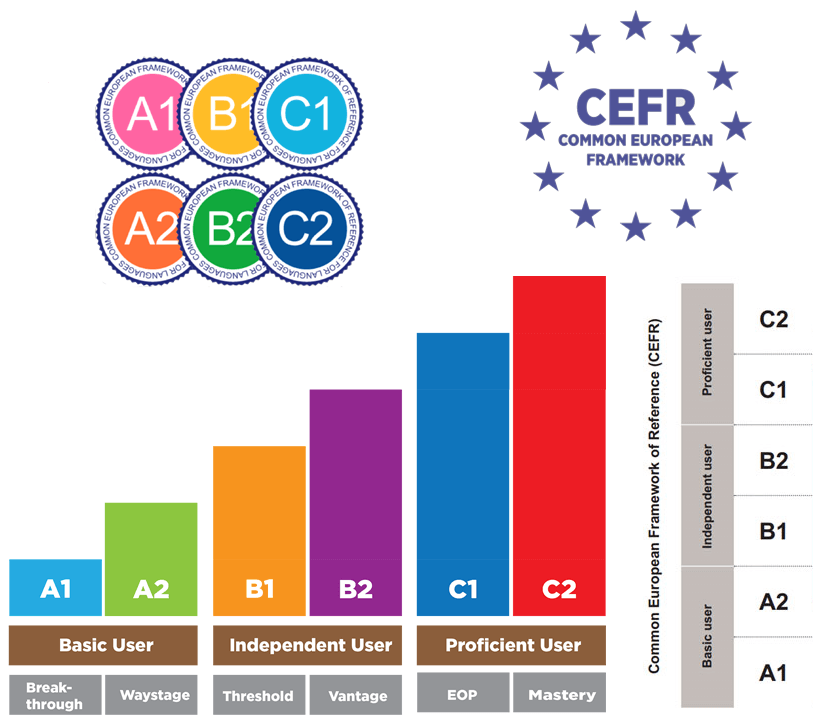
The CEFR describes language activities and competences at six main levels: A1 (the lowest) through A2, B1, B2, C1, and C2 (the highest). The levels include can-do statements, which describe in a positive way what language learners can do when they use a language, rather than what they cannot do.- A1 is the ‘’discovery’’ level, we call it Break-through in English. That means you start learning the basics. At the end of this level, you can interact in a simple way on basic daily subjects like:
- After A1, this is also the moment to decide whether you want to keep with learning this language
- A2 is the ‘’survival’’ level, we call it Waystage in English. In A1 you are note really able to have a real conversation, in A2 you can. The subjects are still very basic but you can survive in the country.
- B1 is the intermediate level, called Threshold in the CEFR. This is not an easy level psychologically speaking. Why? Because you’ve made great progress in A2 and now you’ll have the impression to stagnate a bit. This is totally normal. The learning process is not a straight line. I have designed a graph so you can visualize the steps of the language acquisition for an average learner, it’s far from being proportional:.
- B2 is the upper intermediate level or vantage. We can also consider it as an advanced level in French. Indeed, B2 is a great level since you start feeling very confident in expressing yourself in all kind of subjects, even abstract ones, debate and explanations. You can explain a viewpoint on a topical issue giving the advantages and disadvantages of various options. In my opinion, you can make B2 the goal to reach to speak well.
- C1 and C2 are specific levels for people who aim to speak like natives. In C1, you learn the vocabulary you are still missing and correct your last pronunciation problems. You should know all the grammar already, so this is not the purpose of this level.
- C2 is for people who want to teach the language or to become an interpreter or a translator. If someone reaches this level, that means he/she speaks better than a lot of native speakers!
Break-through
Introducing yourself, expressing your tastes, organizing meeting up with friends, giving your opinion, buying something in a shop, giving an advice, describing something or someone, using present and future tenses.
Waystage
You can do everything we described in A1 but much more precisely and accurately. You can also express your opinion and write short texts.
What’s interesting in A2 is that you go through most of the important grammar themes and learn a good amount of vocabulary. Usually, people progress a lot in A2.
Threshold
During B1 you learn a lot of vocabulary and practice the grammar you’ve learned in A2. You can start debating orally and express yourself with much more precision.
Vantage
Advanced & Mastery
Amount of time to reach each level
The number of hours needed to reach each level depends on the learner and the frequency of lessons. The typical amount of time per level is approximately 120 hours. As a result, you might feel that A1 is too slow and that levels after B1 move too quickly. This feeling depends on your pace and your ability to learn languages.
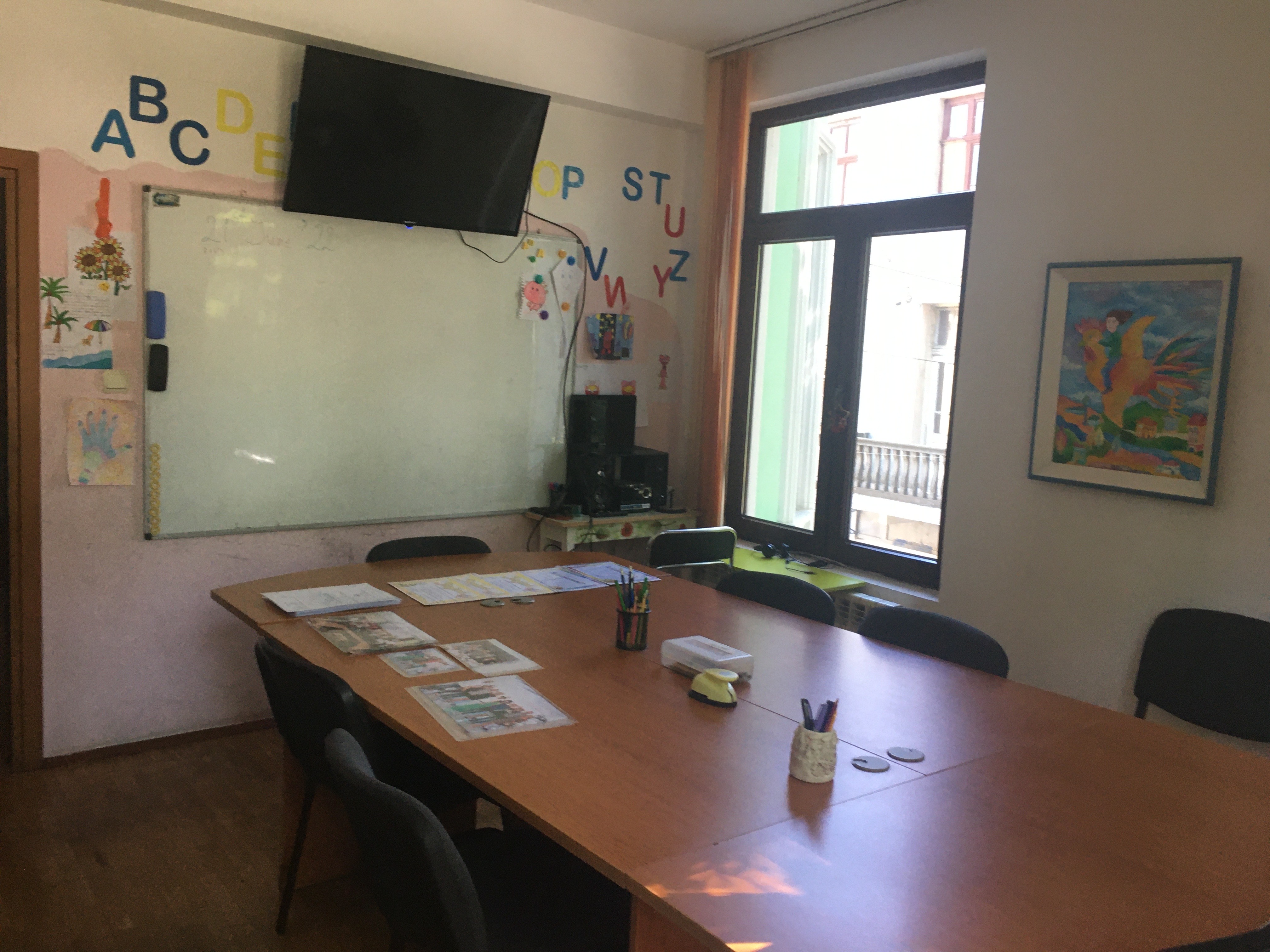
Our Cousy Classroom

👉 Proficiency Levels
- The CEFR proficiency scales provide a convenient structure for thinking about and communicating a progression of language proficiency and for considering where people stand in relation to that progression. Therefore, mapping language test scores onto the CEFR levels is a useful way to assign practical meaning to those scores. ETS has conducted several studies to facilitate the interpretation of the scores of the language tests it develops in relation to the CEFR levels.
It’s important to follow your own rhythm while, at the same time, being aware of the specialists’ recommendations. That will help you keep on track.
Happy Learning Journey! 🤓 🍀

Mariana Trenkova
Teacher
- ⏰ Time180 minutes
- 📆 765 Hours Content3060 minutes
- 🧑💻 10 Regular Check Tests1 Final Test
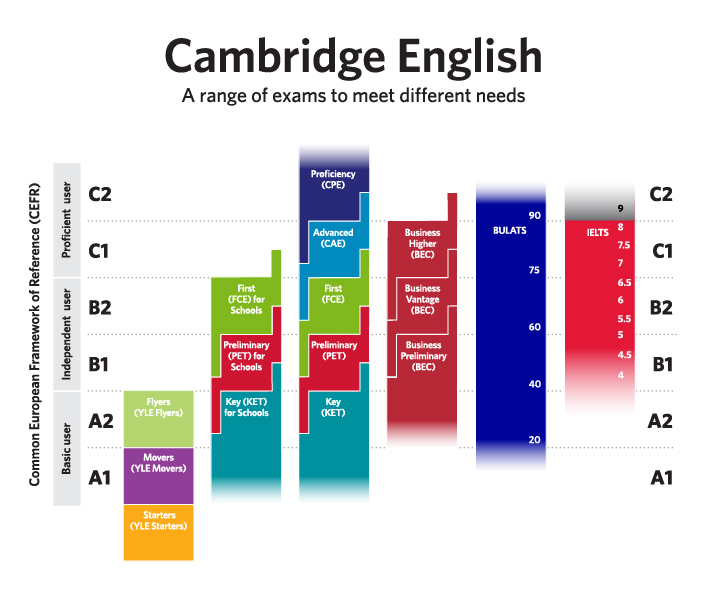
Common European Framework of Reference (CEFR)
The Common European Framework of Reference for Languages (CEFR) is an international standard for describing language ability. It describes language ability on a six-point scale, from A1 for beginners, up to C2 for those who have mastered a language. This makes it easy for anyone involved in language teaching and testing, such as teachers or learners, to see the level of different qualifications. It also means that employers and educational institutions can easily compare our qualifications to other exams in their country.
English B2 (FCE)
Level B2: upper independent English level
Level B2 corresponds to a more advanced, more independent level than previous levels. A B2 user can communicate easily and spontaneously in a clear and detailed manner. This is not yet an experienced speaker, but a B2 user is able to understand and be understood in most situations. This level, in particular, is often required for admission to North American universities and even highly regarded European schools. It is also the level generally required to work or do an internship abroad in most English-speaking countries. Many learners feel a real sense of progress when they reach B2. This intermediate level marks an important break with the previous levels. A B2 user can express themselves naturally, easily, and effectively, take the initiative to speak, and understand and correct their own mistakes while anticipating what they will say and how they will say it.
Your success depends on prior preparation and practice. The combination of the two will help you achieve the desired score on any language test. Once you have passed all four parts of your language test at proficiency level 4, your report card counts as a language certificate needed for admission to nearly all subjects and degree programs at colleges and universities.
English C1
Why take the C1 Advanced (CAE) exam?
Cambridge C1 Advanced (CAE) is an official Cambridge English exam at advanced level. It assesses all four language skills and is aligned with Level C1 of the Council of Europe’s Common European Framework of Reference for Languages (CEFR).
What is Cambridge C1 Advanced (CAE)?
C1 Advanced (CAE) is recognised as an entry or school-leaving qualification at various educational levels. Many companies today require C1 Advanced (CAE) as the minimum requirement for English language competence, which makes it a qualification beyond general requirements and helps successful candidates differentiate themselves from other applicants in their search for employment. Many companies and corporations in Switzerland recognise C1 Advanced (CAE) as a qualification demonstrating very strong language competence.
Photo Gallery